The Conditional Value-at-Risk (CVaR) Approach to Portfolio Optimization
Beyond Variance: Why Traditional Risk Measures Fall Short
Modern Portfolio Theory (MPT) has been the cornerstone of portfolio construction since Harry Markowitz's groundbreaking work in the 1950s. While MPT revolutionized how we think about diversification and risk-return tradeoffs, its reliance on variance as the primary risk measure presents significant limitations in real-world markets.
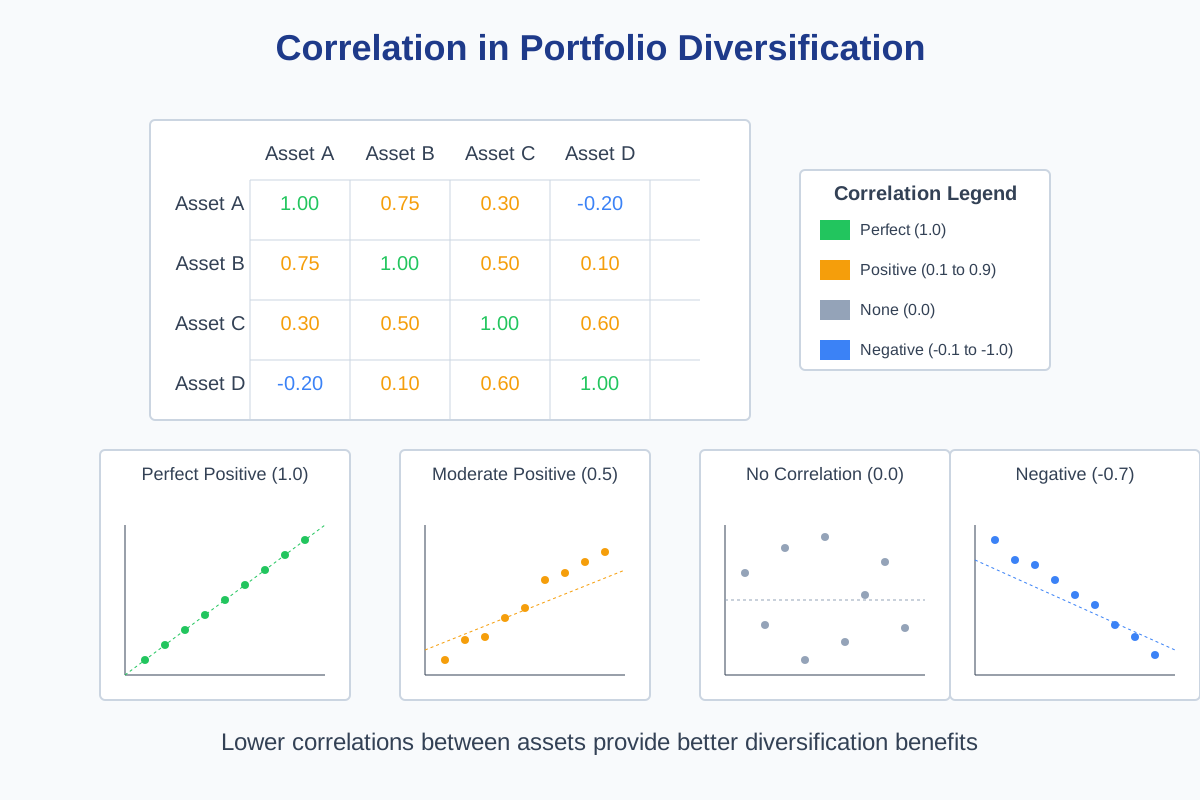
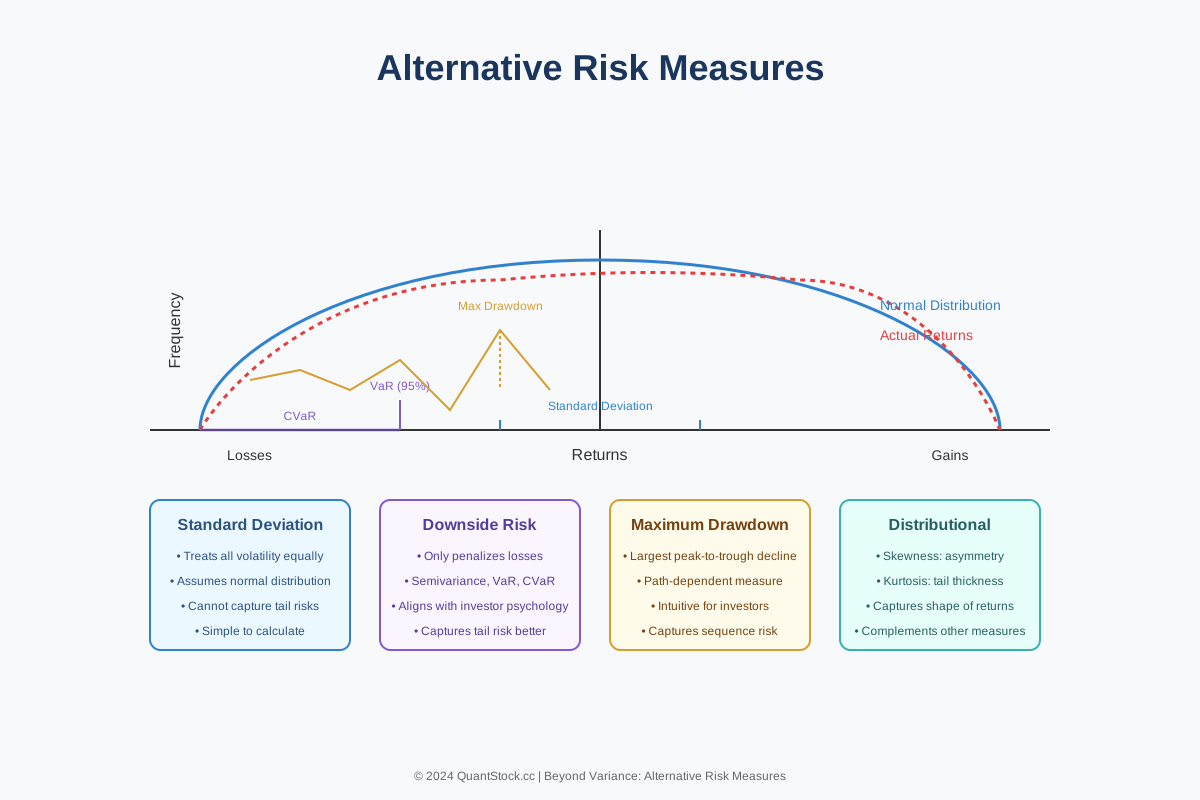
Variance treats upside and downside deviations symmetrically, but investors are primarily concerned with downside risk—the risk of losing money. Additionally, variance assumes normally distributed returns, which fails to adequately capture the fat-tailed distributions characteristic of financial markets, especially during crisis periods.
Understanding Conditional Value-at-Risk (CVaR)
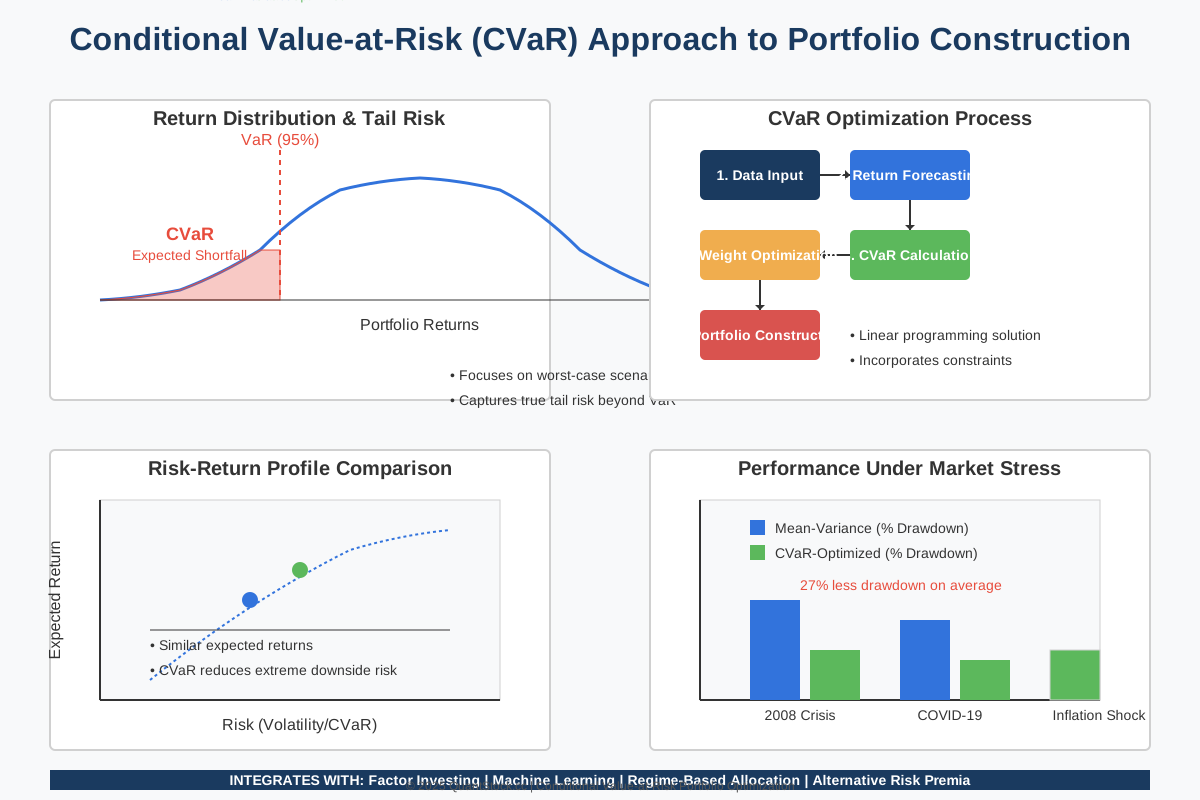
Conditional Value-at-Risk, also known as Expected Shortfall, addresses these limitations by focusing specifically on tail risk—the extreme losses that occur beyond a certain confidence threshold. While Value-at-Risk (VaR) tells you the maximum loss with a given confidence level (e.g., 95%), CVaR goes further by measuring the expected loss given that the VaR threshold has been breached.
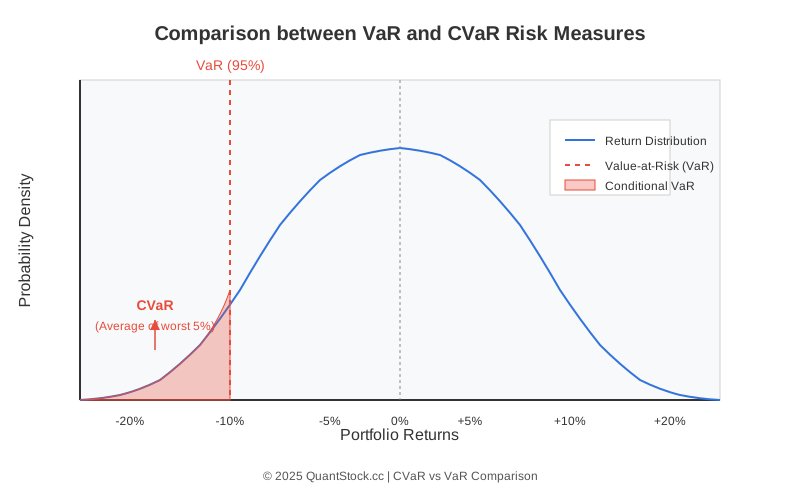
Mathematically, if VaR at a 95% confidence level represents the 5th percentile of the loss distribution, CVaR is the expected value of losses in the worst 5% of cases. This makes CVaR a coherent risk measure—satisfying properties of monotonicity, sub-additivity, homogeneity, and translation invariance—unlike VaR, which can violate sub-additivity in certain scenarios.
Key Advantages of CVaR in Portfolio Optimization
CVaR offers several advantages over traditional variance-based portfolio optimization:
- Focus on downside risk rather than symmetric deviations
- Better capture of tail risk and black swan events
- Coherent risk measure with desirable mathematical properties
- More realistic risk assessment in non-normal market conditions
- Enhanced performance during market stress periods
To compute VaR and CVaR for your own portfolio, from historical returns or from mean and volatility, use our free VaR and CVaR calculator.
Mathematical Framework for CVaR Optimization
The objective of CVaR optimization is to find the portfolio allocation that minimizes the expected loss in the worst-case scenarios. The general formulation is:
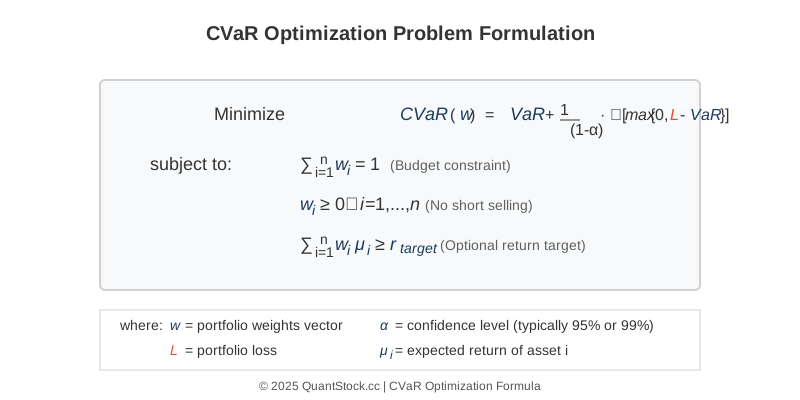
This optimization problem can be transformed into a linear programming problem, making it computationally efficient to solve even for large portfolios. The linearization technique involves introducing auxiliary variables that represent the excess losses beyond the VaR threshold.
Implementation Considerations
When implementing CVaR optimization, several factors must be considered:
- Confidence level selection (typically 95% or 99%)
- Historical vs. Monte Carlo simulation approaches
- Return forecasting methodology
- Additional constraints (sector limits, turnover, etc.)
- Rebalancing frequency
The choice of confidence level significantly impacts the resulting portfolio allocation. Higher confidence levels (e.g., 99%) focus on more extreme tail events, potentially leading to more conservative portfolios, while lower confidence levels may produce allocations more similar to mean-variance optimization.
CVaR vs. Mean-Variance Optimization: Empirical Results
Numerous empirical studies have compared the performance of CVaR-optimized portfolios against traditional mean-variance portfolios, particularly during periods of market stress. The findings consistently show that CVaR-optimized portfolios exhibit:
- Improved downside protection during market crashes
- More robust performance across varying market conditions
- Better diversification beyond simple correlation-based measures
- Higher risk-adjusted returns over full market cycles
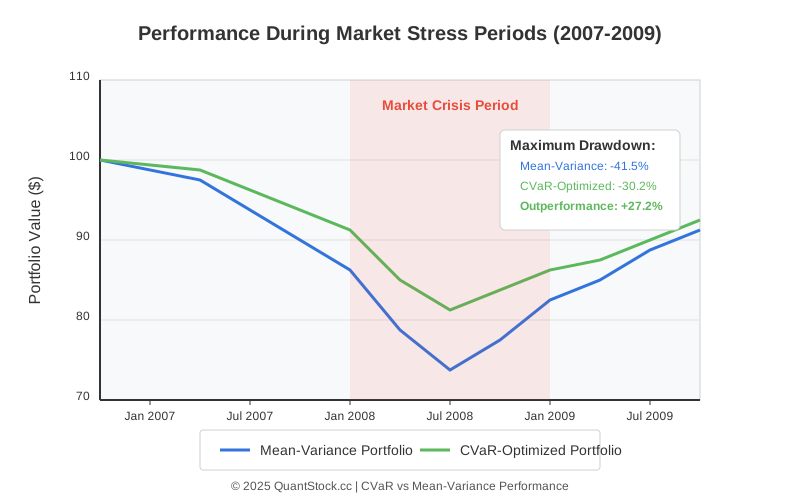
During the 2008 financial crisis, for example, portfolios optimized using CVaR at the 95% confidence level experienced approximately 25-30% less severe drawdowns compared to those optimized using the traditional mean-variance approach, while maintaining comparable long-term returns.
Integrating CVaR with Other Advanced Portfolio Techniques
CVaR optimization can be effectively combined with other advanced portfolio construction methodologies to further enhance investment outcomes:
CVaR and Factor Investing
By incorporating factor investing principles, investors can build portfolios that target specific risk premia while controlling tail risk through CVaR constraints. This approach allows for more precise exposure to desired factors (value, momentum, quality, etc.) while maintaining robust downside protection.
Regime-Based CVaR Implementation
Market regimes significantly impact the effectiveness of risk measures. Implementing regime-based CVaR optimization allows for dynamic adjustment of the confidence level and historical lookback period based on the current market environment, potentially enhancing both returns and risk management.
CVaR and Machine Learning
Advanced machine learning techniques can be employed to improve the estimation of return distributions used in CVaR calculations. Instead of relying solely on historical data, ML models can incorporate additional features and identify complex patterns that might impact tail risk estimation.
Practical Implementation Using QuantStock's Portfolio Optimizer
The QuantStock Portfolio Optimizer platform allows investors to implement CVaR-based portfolio optimization without requiring advanced mathematical knowledge or programming skills:
Step-by-Step Guide
- Enter your desired asset universe (stocks, ETFs, etc.)
- Select the analysis period and data frequency
- Choose "Minimize CVaR" as the optimization method
- Set your preferred confidence level (95% recommended for most investors)
- Add any additional constraints (minimum/maximum allocations, sector limits, etc.)
- Run the optimization to generate your CVaR-optimized portfolio
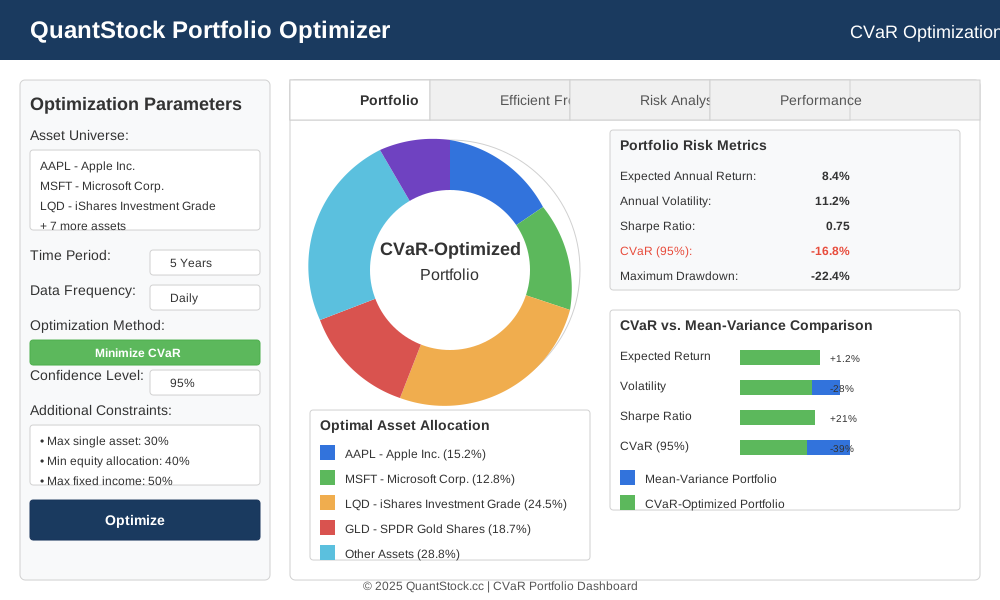
The platform provides comprehensive visualization of the resulting portfolio, including expected returns, CVaR metrics at different confidence levels, and comparative analysis against traditional mean-variance optimized portfolios and benchmark indices.
Limitations and Considerations
While CVaR offers significant advantages over variance-based optimization, several limitations should be considered:
Data Requirements
Accurate CVaR estimation requires sufficient historical data, particularly for higher confidence levels. Limited data can lead to estimation errors, especially for assets with shorter trading histories.
Estimation Risk
Like all statistical measures, CVaR is subject to estimation risk. Small changes in the return distribution can significantly impact CVaR calculations, potentially leading to unstable portfolio weights.
Computational Complexity
While linearized CVaR optimization is computationally efficient, it still requires more processing power than traditional mean-variance optimization, especially for large asset universes or when using Monte Carlo simulation approaches.
Implementation Challenges
Implementing CVaR-based portfolios may face institutional constraints, such as benchmark-relative performance evaluation, which can limit the adoption of this approach despite its risk management benefits.
Conclusion: The Future of Risk-Focused Portfolio Optimization
As markets continue to exhibit non-normal behavior and extreme events become more common, traditional variance-based portfolio optimization increasingly shows its limitations. Conditional Value-at-Risk represents a significant advancement in portfolio construction methodology, offering a more robust approach to managing downside risk while maintaining return objectives.
By shifting focus from symmetric risk measures to tail risk management, investors can build portfolios better equipped to withstand market stress while capturing long-term growth opportunities. The integration of CVaR optimization with other advanced techniques such as factor investing, regime-based allocation, and machine learning represents the frontier of quantitative portfolio management.
For investors seeking to enhance their portfolio construction process, implementing CVaR-based optimization through platforms like QuantStock offers an accessible entry point to these advanced risk management techniques without requiring specialized mathematical knowledge or programming expertise.
Free Trading Math & Risk Cheat Sheet
Every key formula in one PDF: breakeven win rates, expectancy, position sizing, drawdown recovery, volatility drag, VaR and CVaR. Plus occasional emails when we publish new quant tools.